
Une opération d’ampleur départementale
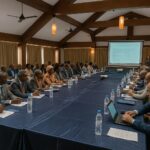
On 30 August in Sibiti, the Minister launched the “Trimestre de l’assainissement de la Lékoumou”, an unprecedented campaign scheduled from September to November, designed to résoudre, with pragmatism, the chronic sanitation challenges that accompany the rapid urban expansion of the department.
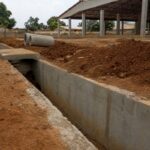
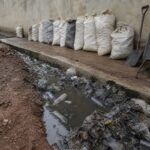
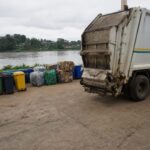
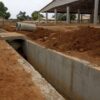
The initiative targets canals, streets and public facilities through systematic cleaning, waste collection and the eradication of illegal dumps, while placing citizen awareness at the heart of each action to ensure lasting behavioural change.
By giving the operation a fixed horizon of three months, the ministry seeks to conjugate urgency and planning, two dimensions often difficiles à concilier dans la gestion des déchets dans les collectivités locales congolaises.
Des objectifs sanitaires et sociaux
The sanitary stakes are high, as stagnant waters and scattered plastics favour vectors of malaria and cholera; reducing these breeding grounds is expected to alleviate the epidemiological burden weighing on households already confronting multiple vulnerabilities.
Socially, the programme reinforces a sense of belonging to a shared urban space; cleanliness becomes a collective narrative capable of transcending political nuances and uniting neighbourhoods around a concrete, observable goal: a healthier public environment.
The prefect of Lékoumou underlined that Sibiti, epicentre of the campaign, experiences one of the country’s fastest demographic growth rates, which inflates waste volumes at a pace previously unseen in this forested region.
Mobilisation communautaire en première ligne
Community participation is not ornamental; it is the backbone of the trimester. Religious congregations, parent associations and youth collectives are solicited to patrol alleys, sort plastics and relay prevention messages, creating a grassroots vigilance network.
According to municipal councillor Florian Aristide Likibi, the weekly “Sibiti ville propre” routine, already anchored in local habits, offers a solid springboard; the new campaign simply intensifies the rhythm and extends responsibility beyond the city centre.
Training sessions planned for volunteer brigades will cover waste segregation, composting principles and first aid, acknowledging that environmental action and basic health literacy often progress hand in hand within peri-urban contexts.
Un dispositif pédagogique et médiatique
Communication accompanies the broom. Local radio slots, door-to-door visits and evocative posters converge to translate technical recommendations into everyday gestures, from storing household refuse in sealed containers to keeping gutters unobstructed ahead of the rainy season.
The ministry insists on measurable indicators: number of cleaned drains, volume of plastics recovered, and participation rates in monthly salubrité days, data that will be published to sustain momentum and stimulate friendly competition among districts.
Media coverage also seeks to rehabilitate the image of sanitation work, sometimes perceived as punitive; showcasing pupils, athletes or artists wielding shovels provides aspirational role models and counters the social stigma attached to manual cleaning tasks.
Le rôle catalyseur des autorités locales
Handing over rakes and wheelbarrows, Minister Juste Désiré Mondelé framed the operation as the translation of recommendations issued during the first national forum on urban hygiene, signalling governmental continuity and responsiveness to policy feedback.
The prefecture commits to allocating fuel for waste-collection trucks, while municipal engineers map priority drainage corridors. Such alignment between deconcentrated services and local elected officials is often cited by planners as a determinant of successful public sanitation.
Financially, the trimester leverages existing budget lines rather than creating new ones, an approach meant to ensure replicability in other departments once results are consolidated and documented.
Le complément routier: Komono-Mbila
In the same ceremony, earth-moving machines started upgrading the 25-kilometre Komono-Mbila road. The corridor connects agricultural pockets to Sibiti’s markets; smoother logistics will reduce roadside dumping by enabling faster waste evacuation and lowering informal burning practices.
Locals, interviewed on community radio, expressed hope that easier transport will entice private recyclers to collect plastics currently stockpiled in villages, creating micro-jobs and closing material loops compatible with a circular-economy vision.
Perspectives durables pour la Lékoumou
If the targets are met, the Lékoumou experience could become a reference model, demonstrating that sanitation, community cohesion and local mobility constitute interdependent levers for resilient territories in the Congo, especially amid the growing pressures of climate variability.
The ministry plans to commission an independent follow-up evaluation six months after the trimester, a timeframe designed to verify the durability of behavioural change once media spotlights fade.
For now, brooms scrape the asphalt at dawn, loudspeakers broadcast jingles about shared responsibility, and a tangible optimism circulates along Sibiti’s avenues, proof that environmental action, when collectively owned, can translate policy into palpable public good.
Pari éducatif pour la jeunesse
Schools participate through environmental clubs that integrate waste audits into science classes; pupils tally the weight of collected plastics and graph the results, converting sanitation into a live laboratory that nurtures scientific curiosity and civic engagement simultaneously.
Teachers report that integrating hands-on cleaning tasks improves attendance on campaign days, illustrating how practical ecology can re-motivate learners and anchor the curriculum in immediate community concerns rather than abstract textbook examples.
The national youth council considers replicating the model during holiday camps across several departments next year.